




 ALL ORIGINALS
«Power and the money, money and the power»


Vincent van Gogh lived on his brother's money. For most of his working life Theo sent him a monthly allowance, and Vincent's letters keep coming back to it: paint, canvas, rent, food, the next payment. He died in 1890 having sold very little. A century later, in 1990, his Portrait of Dr. Gachet went for $82.5 million at auction, then a record for any painting. No piece of dollar bill art could invent a sharper irony.
That gap, between the painter and his price, is the starting point of this painting.
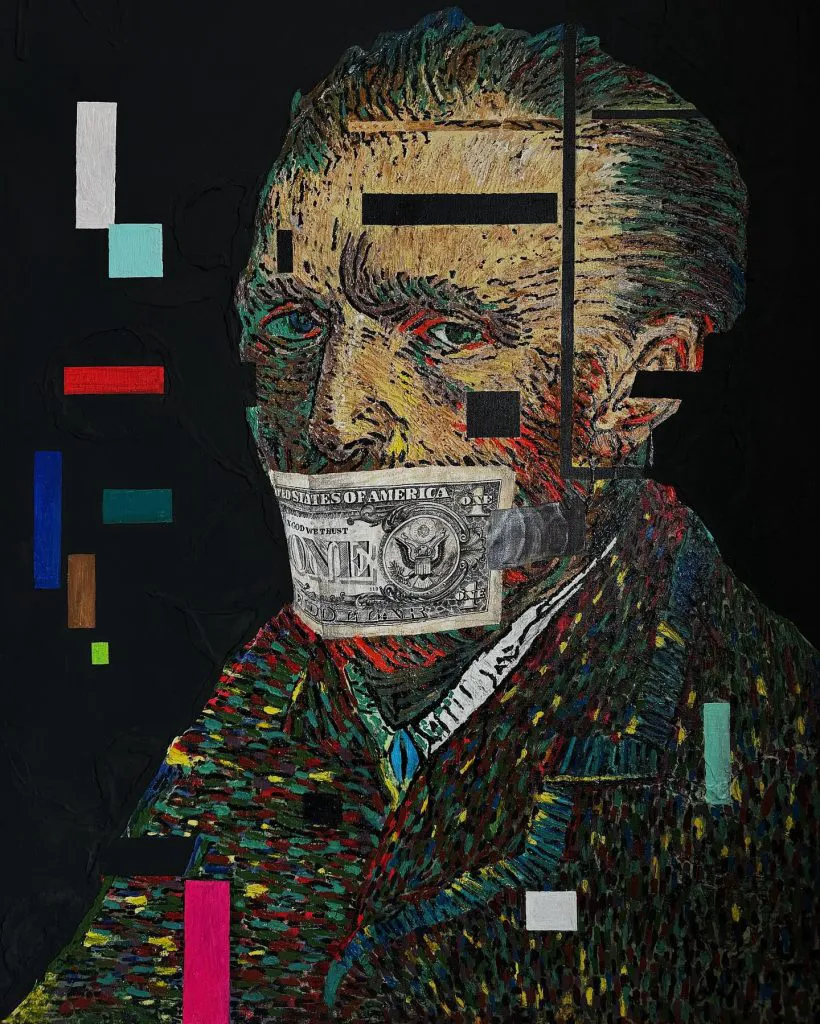
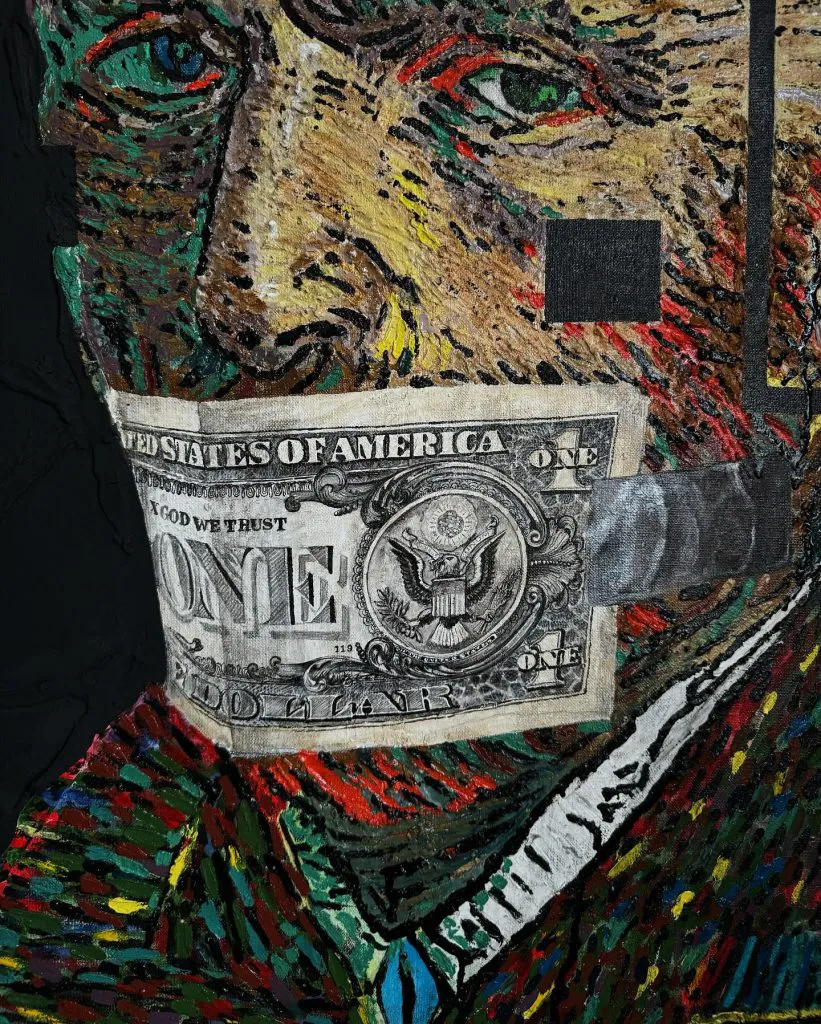
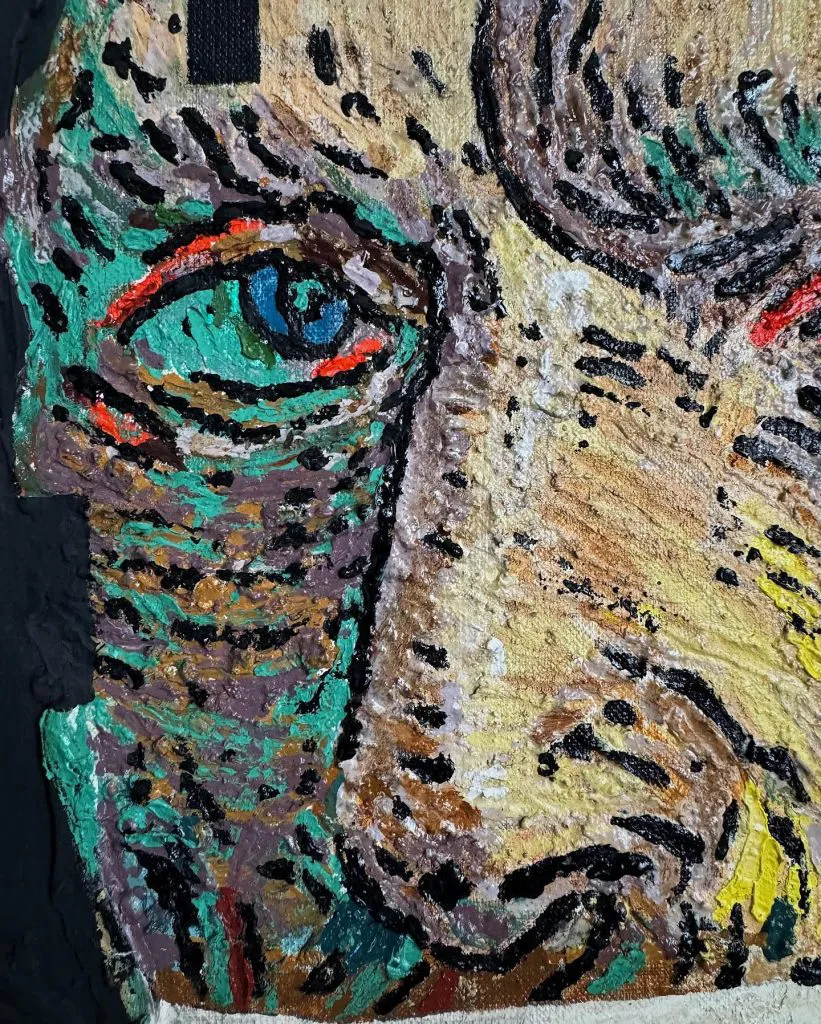
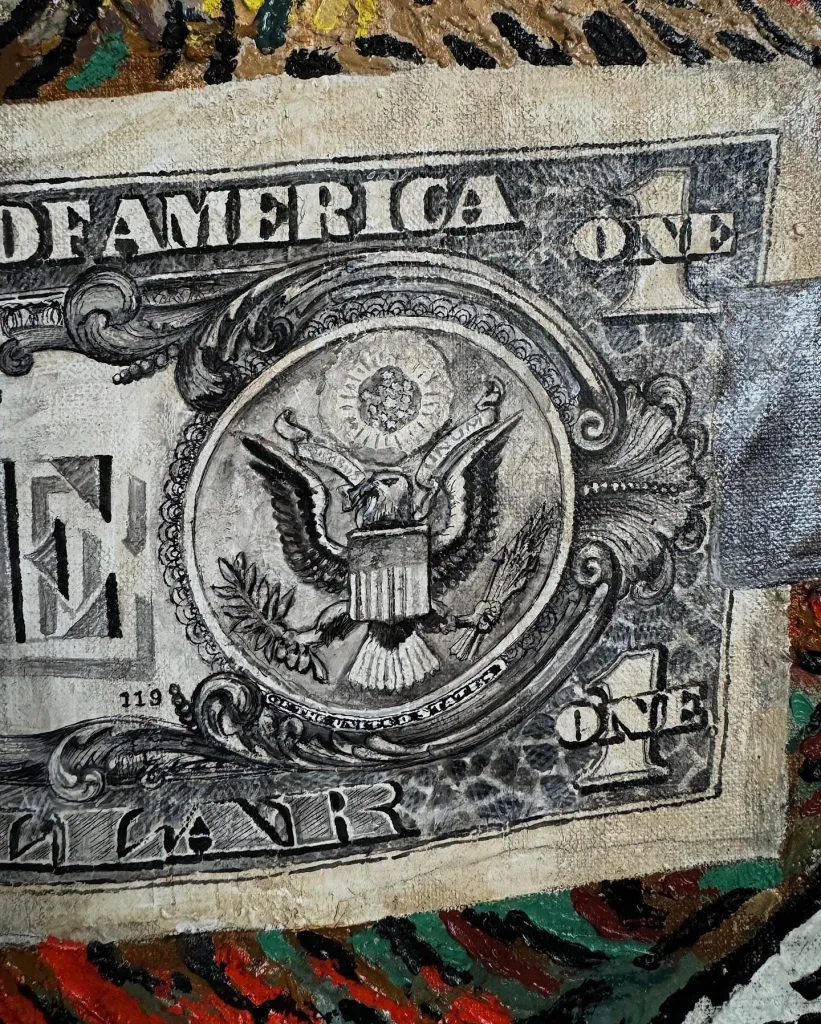
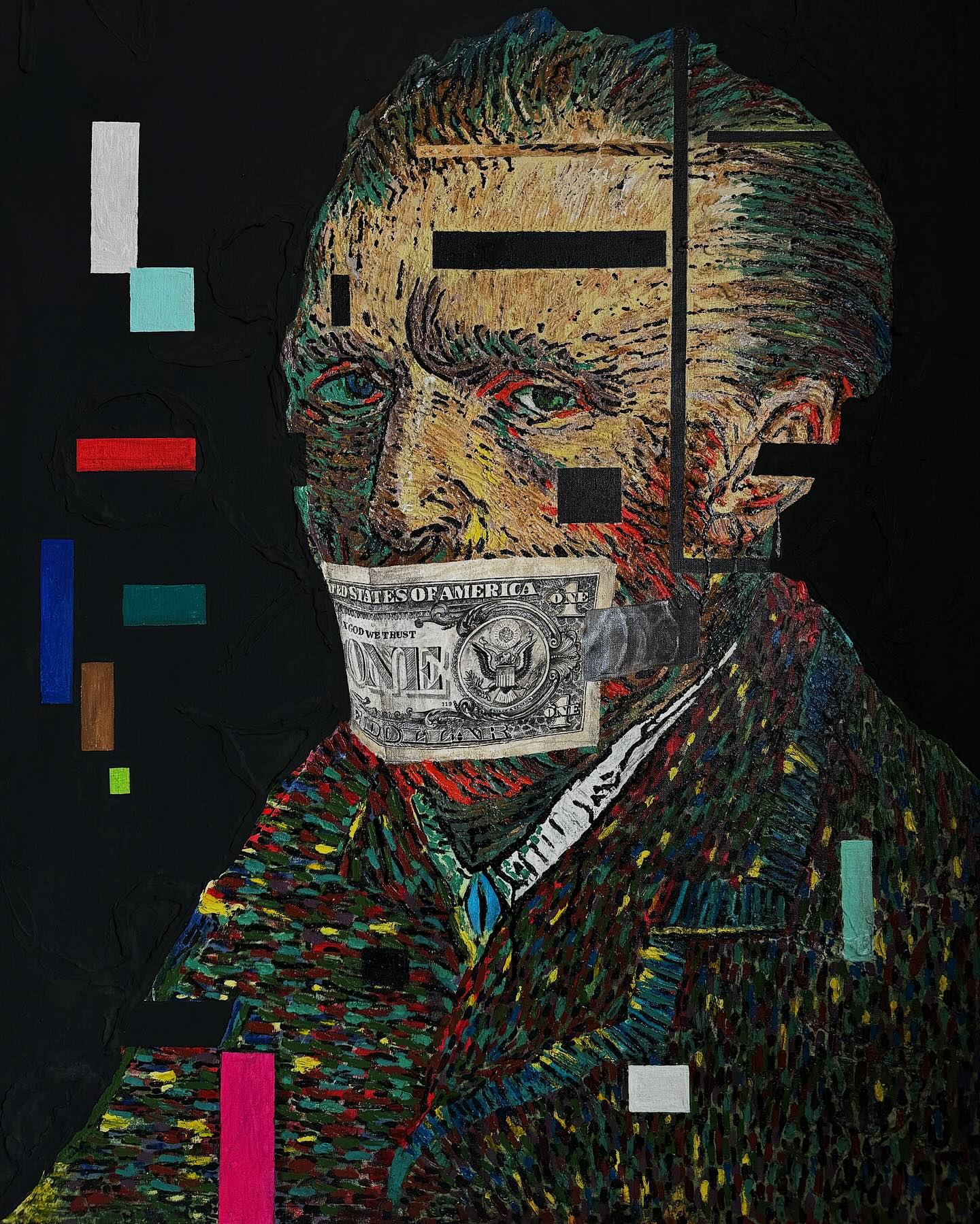
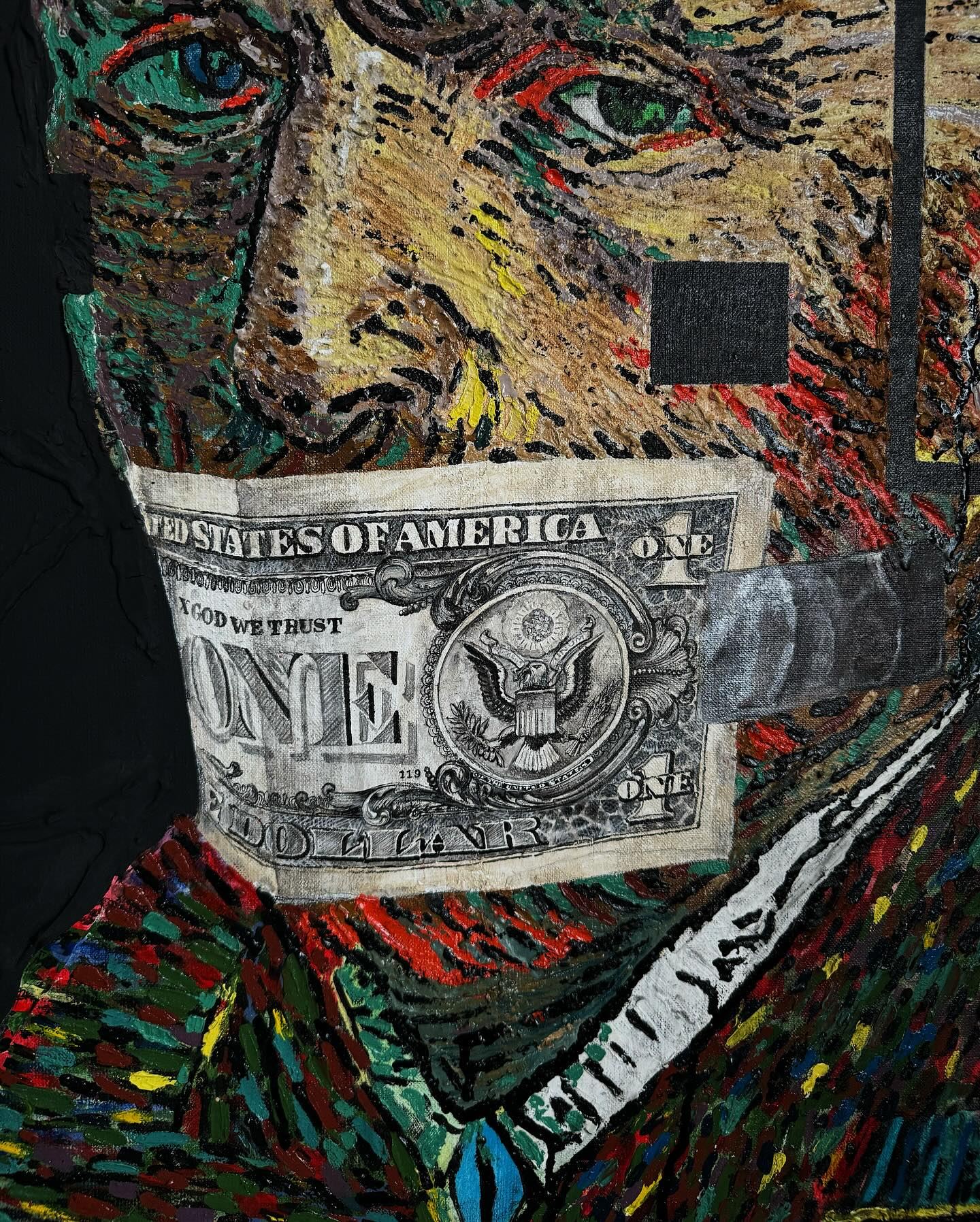
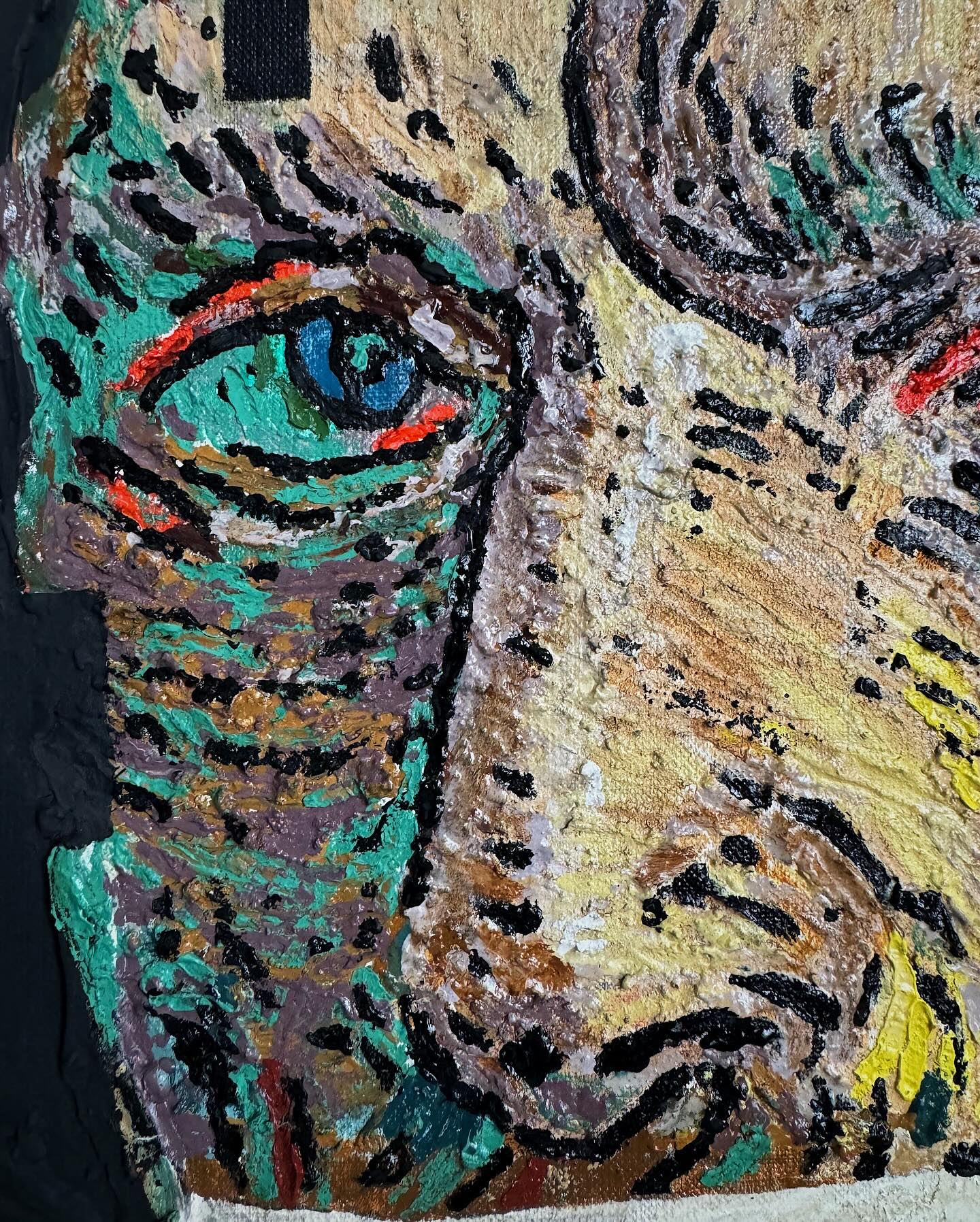
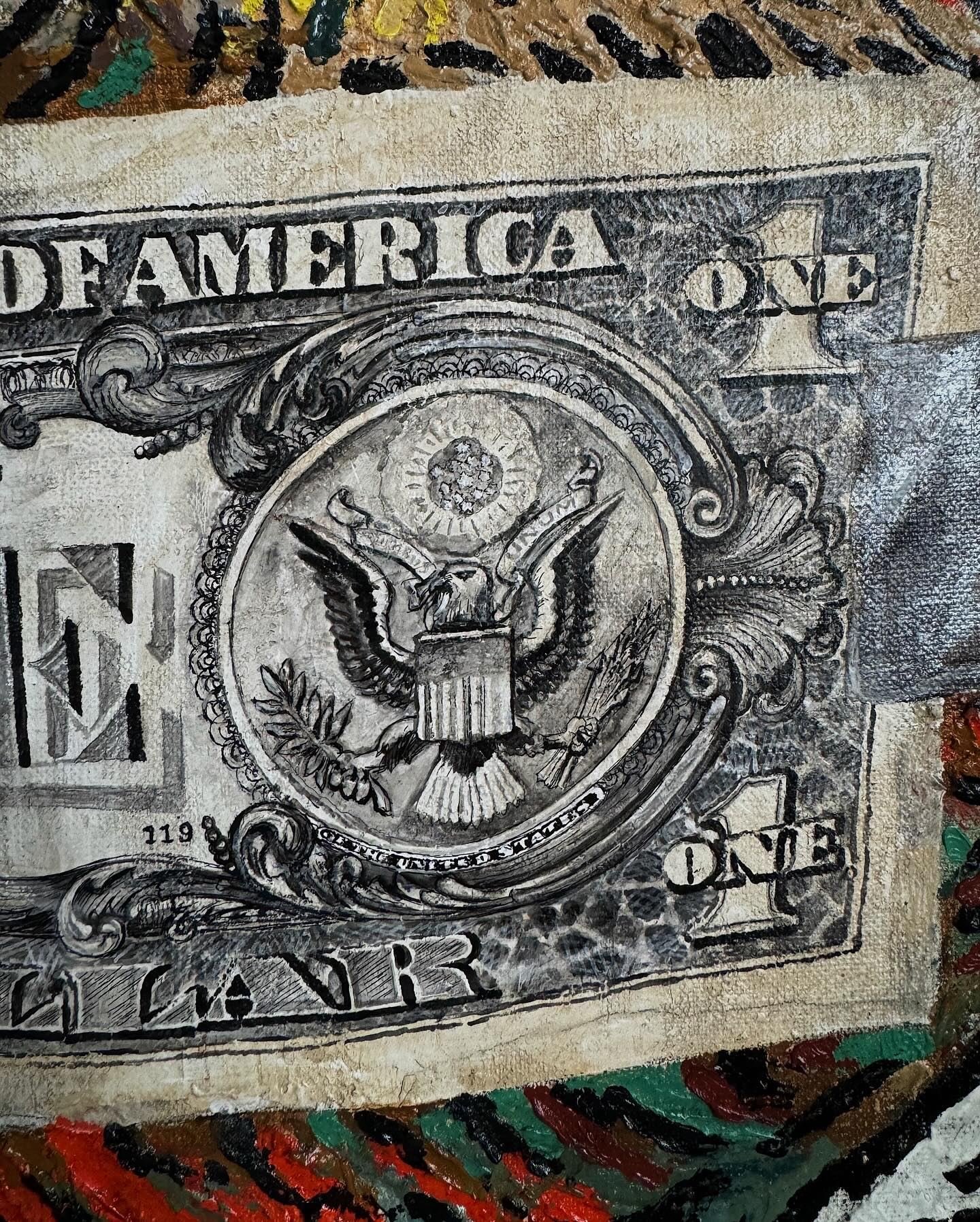
The face comes from Van Gogh's self-portraits, rebuilt in short, thick strokes of green, ochre, red and blue, with the coat turned into a field of coloured dashes. Across his mouth sits a one-dollar bill, held in place by a strip of grey duct tape. Black bars and a thin black line cut across his forehead and cheek, like a redaction or a glitch. Loose blocks of white, cyan, red, blue and pink float on the black ground, a Mondrian grid pulled apart.
Contemporary pop art has run into this joke before. In 2018 Banksy's Girl with Balloon shredded itself at Sotheby's seconds after selling for just over a million pounds. Three years later the half-shredded canvas, renamed Love is in the Bin, sold again for about 18.6 million. The protest became the product. I wanted Van Gogh to stand for every artist the market talks over. The tape is the point: money is literally what keeps him quiet.
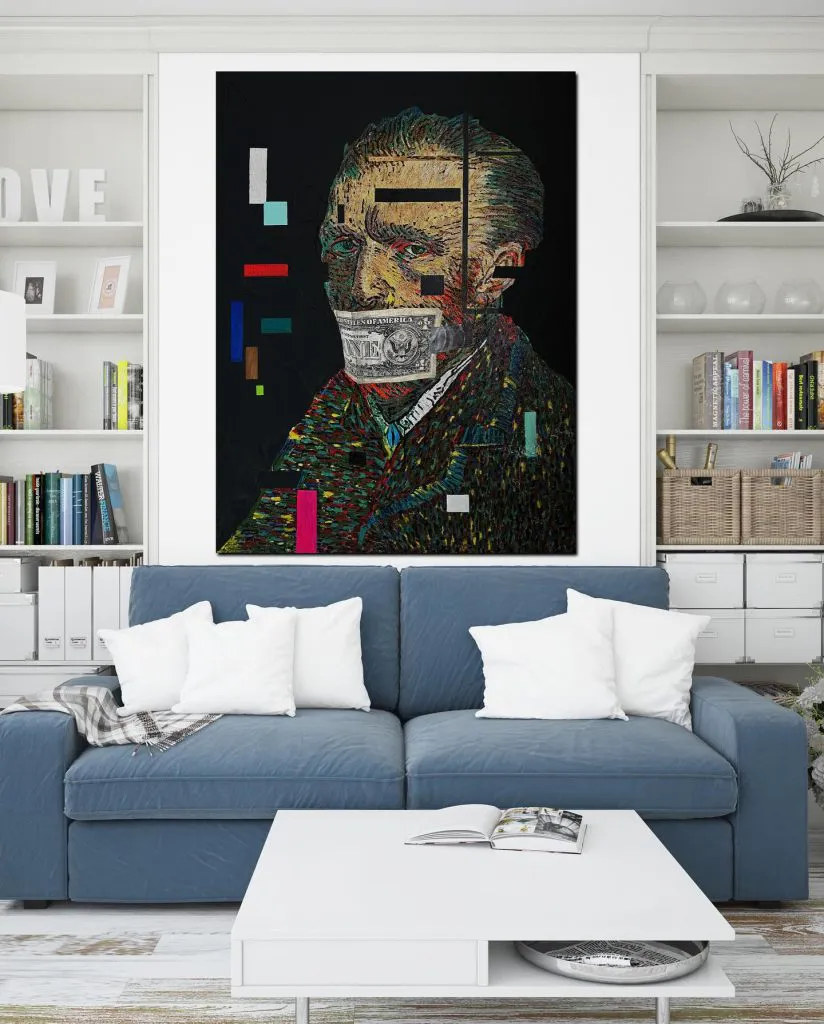
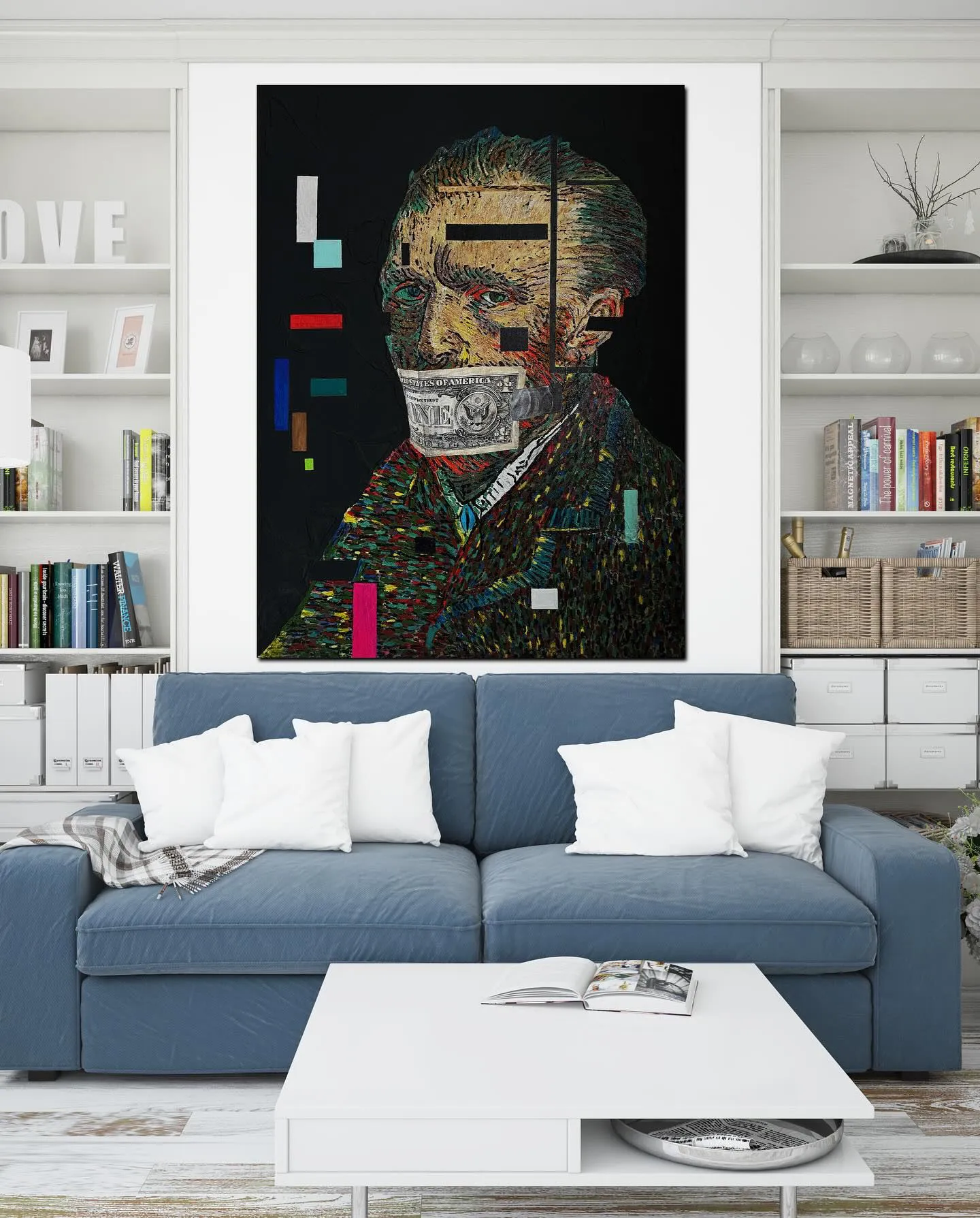
This is the original pop art painting, 120 x 90 cm, painted by hand on canvas. There is only one. It's built as statement wall art, for an office or a collector's living room, and it's the largest dollar bill art piece in the collection. For a smaller version of the same image, see the hand-finished lithograph. Most of my original paintings are already in private collections, but I paint originals to order in any size. To ask about this one, message me on Instagram or by email.
Every artwork is made to order — we confirm availability, production time and delivery before payment.