

If you typed “hand embellished print” into a search box, you are probably looking at a listing and trying to decode it. Fair. The label usually leans on a handful of words: print, lithograph, original, hand-embellished, numbered. They are not synonyms. Each answers a different question, and a buyer can read them like a checklist. I think most confusion in this corner of the art market comes from treating them as one word.
Print and lithograph
“Print” is the widest word. It says an image was multiplied. It does not say who made the image, how, or how many copies exist.
“Lithograph” is narrower, but it names a technique, not a quality. Alois Senefelder invented lithography in Bavaria in the late 1790s. It rests on a plain fact: grease and water repel each other. The image is drawn with a greasy material on a flat surface, traditionally stone, today often a metal plate, usually aluminium. The surface is wetted, and ink sticks only to the greasy image. Tate explains the process well.
Commercial printing largely uses offset lithography, where the image goes from a plate to a rubber blanket and then to paper. So a drawing made on stone by an artist and a page from a commercial run are both lithography. They are not the same object. When you see “lithograph”, ask who made the image and how it got onto the plate.
Giclée is a method, not a grade
Giclée is a name for fine-art inkjet printing. The term is credited to Jack Duganne, around 1991. It is a marketing name. It guarantees nothing about quality. A careful one can look excellent and a careless one can look flat, and both carry the same word. Ask what it was printed on, who prepared the file, and whether the image started as the artist’s own work.
Original or reproduction?
The Print Council of America has criteria for an original print. The artist makes the image on the matrix, which means the plate, stone or screen. The impression is made by the artist or under their direction. The artist approves the result.
A copy of a work first conceived in another medium is a reproduction. A painting photographed and then printed is the standard example. That is not an insult. “Reproduction” is an honest word, and plenty of good objects are reproductions. The trouble starts when a label blurs the line. If the seller will not say whether the image began as a painting or as a plate, you have your answer.
What hand-embellished means
Dealers use “hand-embellished” or “hand-finished” to mean a printed reproduction, often an inkjet one, to which the artist adds paint or drawing by hand, so each piece differs a little. It is a trade term with no fixed standard. One dealer glossary shows how the word is used in practice.
So the word alone tells you very little. Ask what lies underneath. Ask how much of the surface was touched by hand and whether the hand was the artist’s.
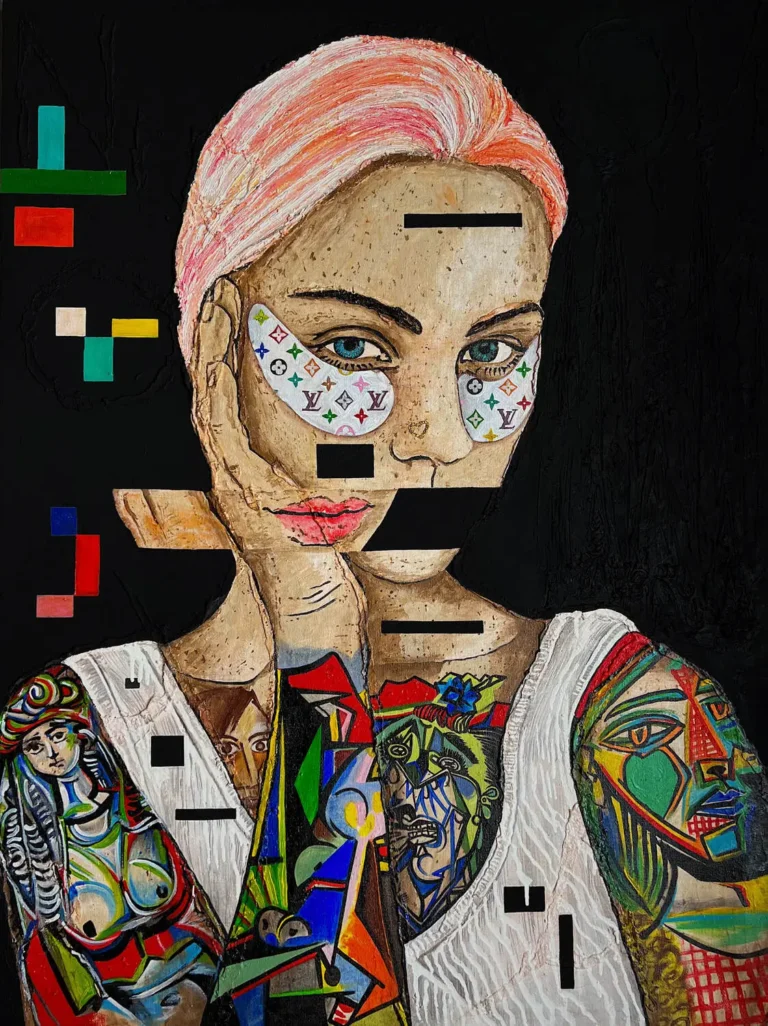
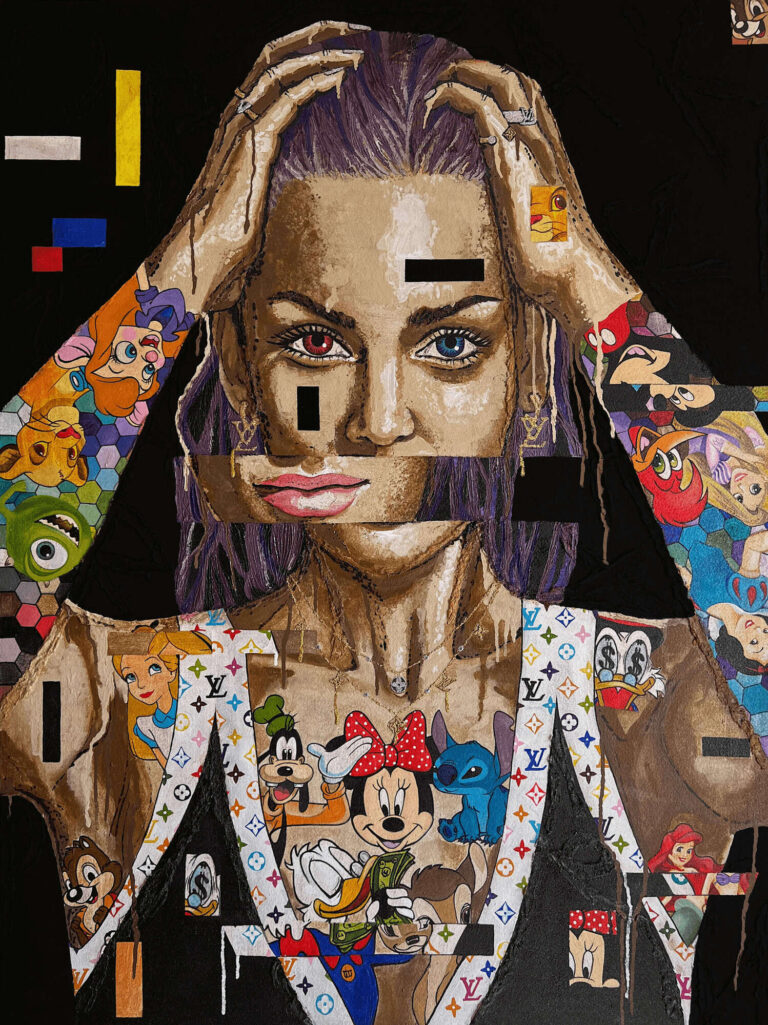
Here is how I handle it. My lithographs are canvas lithographs: a print made from my own painting, then finished by hand with my acrylic brushstrokes and textured gel that goes on white and dries completely clear. On my pages I say “lithograph”, not “print”. “Hand embellished print” is simply the phrase people search for. Because the image started as a painting and not as a plate, I do not present my lithograph as an original print in the strict sense above. I call it a hand-finished lithograph of my own painting. The lithographs include Picasso Dreams and Disney Dreams.
Reading 12/100
A fraction on a sheet is simple. “12/100” means this impression is number 12 from an edition of 100. Sotheby’s puts it as “This impression is number 12 from the edition of 100.” Artist’s proofs, marked A.P., sit outside the numbered run.
The number tells you the size of the run. It does not tell you the worth. Sotheby’s lists what moves value: edition size, the artist’s market, the place of the work in the body of work, and condition. A small edition is not automatically valuable, and a large one is not automatically cheap. Treat “limited edition” as a claim that needs a figure behind it. If the seller cannot say how many exist, the word is decoration.
Mine do not carry a fraction. Each has its own number and certificate, and there is no numbered edition run. For that reason I do not call them limited edition.
Certificates, and how I label mine
My view is plain. A certificate of authenticity, or a signature, does not make a print valuable on its own. It documents who says what. It is paper from the seller about the seller’s product.
That does not make it useless. A good certificate names the technique, the materials, the size, the maker and the edition, if there is one. A vague one tells you nothing you could not read in the listing. Judge the certificate by what it commits the seller to.
So the checklist is short. What is the technique? Did the image begin as a painting or as a plate? What was added by hand, and by whom? How many exist? What does the paper actually say?
Mine come framed, at 400 euros each. Shipping from Poland is paid by the buyer and quoted separately. My originals are one-of-a-kind paintings, with the price on request, and any work can be painted to order in any size. I keep the labels plain on purpose, so the words say what the object is.
See the lithographs or write to me on Instagram.
Anonymous contemporary pop artist with a studio in Poland. I paint original pop art in oil and acrylic and make hand-finished lithographs. About me · More from my journal